Dog Body Language: How to Understand What Your Dog Is Really Saying
Have you ever come home to find your dog with their ears pinned back, tail tucked, looking up at you with wide eyes? You probably knew immediately that they had gotten into the trash. But what about when a strange dog approaches you with a stiff wagging tail? Do you pet them, or do you back away?
As humans, we rely heavily on verbal communication. Dogs, however, speak a silent but incredibly expressive language. They are constantly communicating their emotional state, intentions, and needs through their posture, facial expressions, and movement. Learning to speak “Doglish” isn’t just a fun party trick; it is an essential skill that prevents bites, reduces anxiety, and deepens the bond between you and your best friend.
In this guide, we will decode the subtle and not-so-subtle signs your dog is using to talk to you.
The Tail: It’s Not Just About Happiness
The most common misconception in the dog world is that a wagging tail equals a happy dog. While happiness is one reason a tail wags, it is far from the only one. A wagging tail simply indicates arousal or stimulation. It means the dog is willing to interact, but that interaction could be friendly, or it could be aggressive.
The “Wagging” Myth
If you see a dog with a stiff body and a tail that is vibrating or wagging slowly and stiffly near the top of their rump, this is often a “flag” of high alert or potential aggression. Do not approach this dog. Conversely, a “helicopter tail” that swings in a wide circle is a definitive sign of friendly excitement.
Tail Position matters
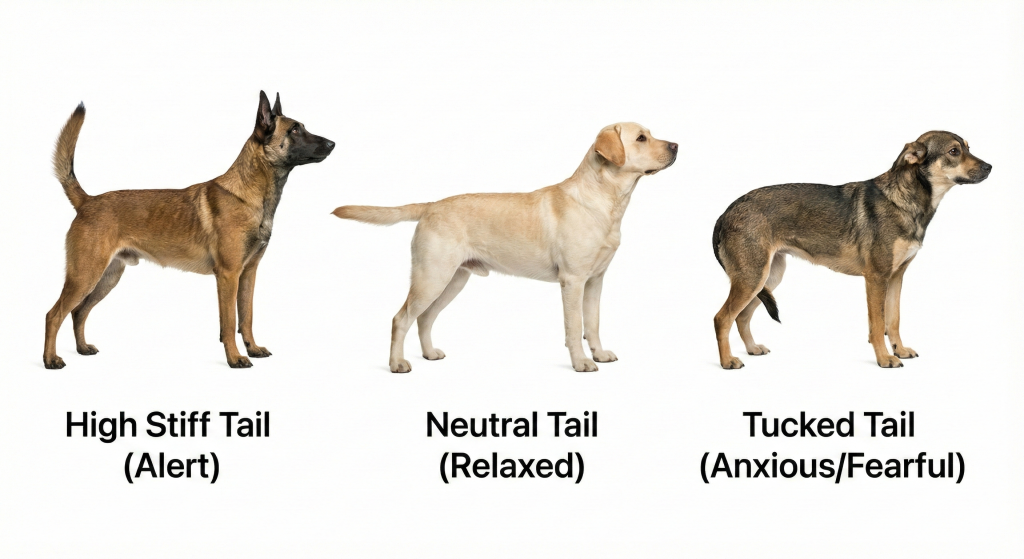
- High and Stiff: Indicates confidence, dominance, or alertness. The dog is asserting presence.
- Neutral (Spine Level): The dog is relaxed and comfortable.
- Low or Tucked: Indicates fear, submission, or anxiety. The dog is trying to make themselves look smaller to avoid conflict.
Speed and Direction
Researchers have found that dogs tend to wag more to the right when they see something they like (like their owner) and to the left when they see something they are unsure of (like a dominant strange dog). This is linked to the brain’s hemisphehemispheres—the left brain controls the right side of the body and processes positive emotions.
The Eyes: Windows to the Canine Soul
Your dog’s eyes can tell you if they are ready to cuddle or if they need space.
Soft vs. Hard Stare
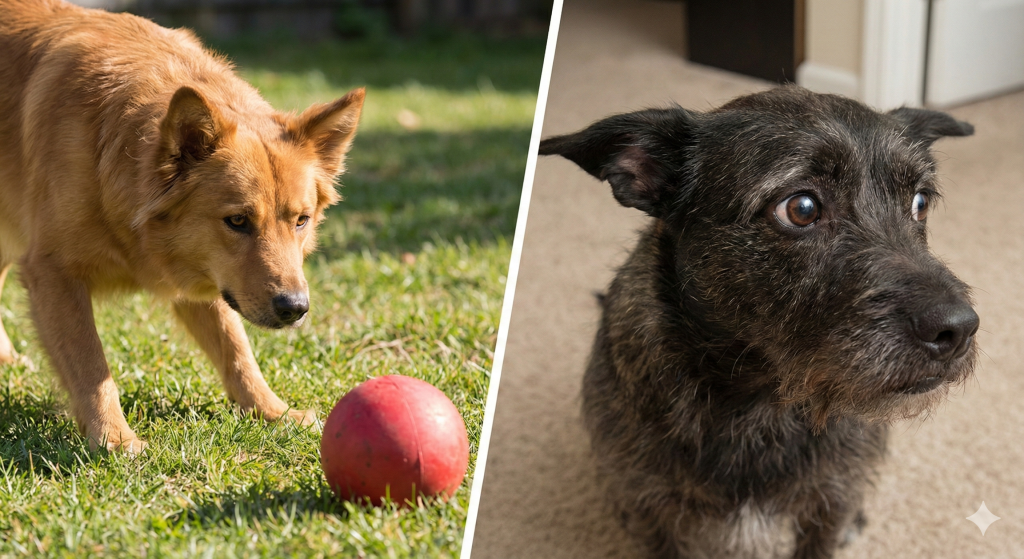
A soft gaze is relaxed. The eyelids might look slightly droopy, and the dog looks friendly. This is how your dog looks at you when you are scratching their ears.
A hard stare, however, is a threat. If a dog freezes and stares directly into your eyes without blinking, they are guarding a resource (like a bone) or asking you to back off. This is a precursor to a bite.
Whale Eye
“Whale eye” occurs when a dog turns their head away from you but keeps their eyes fixed on you, revealing the whites (sclera) of their eyes. This is a major sign of anxiety or discomfort. If you see this while hugging a dog, stop immediately—the dog is stressed.
The Ears: Antennas of Emotion
Ear shape varies wildly by breed, from the upright ears of a German Shepherd to the floppy ears of a Beagle. However, the base movement remains the same.
Pricked Forward
When ears are up and forward, the dog is alert, interested, or studying something. They are gathering information.
Pinned Back
Ears pinned flat against the head usually signal fear or submission. However, there is a nuance here: sometimes ears go back slightly into a “seal” shape when a dog is greeting a loved one—this is a friendly gesture often accompanied by a wiggly body.
The Mouth: Smiles, Snarls, and Yawns
The mouth provides some of the most confusing signals for dog owners because they often mimic human behaviors that mean something entirely different.
The “Submissive Grin”
Some dogs “smile” when they are happy or submissive. They pull their lips up and show their front teeth. To the untrained eye, this looks like a snarl. The difference? A submissive grin is accompanied by a lowly wagging tail, squinty eyes, and a soft body. A snarl involves a stiff body, a hard stare, and usually a growl.
Lip Licking and Yawning
These are known as appeasement signals. If your dog yawns while you are training them, they aren’t bored; they are stressed or confused. They are trying to calm themselves down. Similarly, a quick flick of the tongue over the nose (lip licking) is a subtle sign that the dog is uncomfortable with the current situation.
Panting
Dogs pant to cool down. But “stress panting” looks different. It is usually shallower, faster, and the dog’s mouth may look tight at the corners (commissures). If it’s not hot and your dog is panting heavily, look for a stressor in the environment.
Posture and Overall Body Movement
You cannot read a single body part in isolation; you must look at the whole dog.
The Play Bow
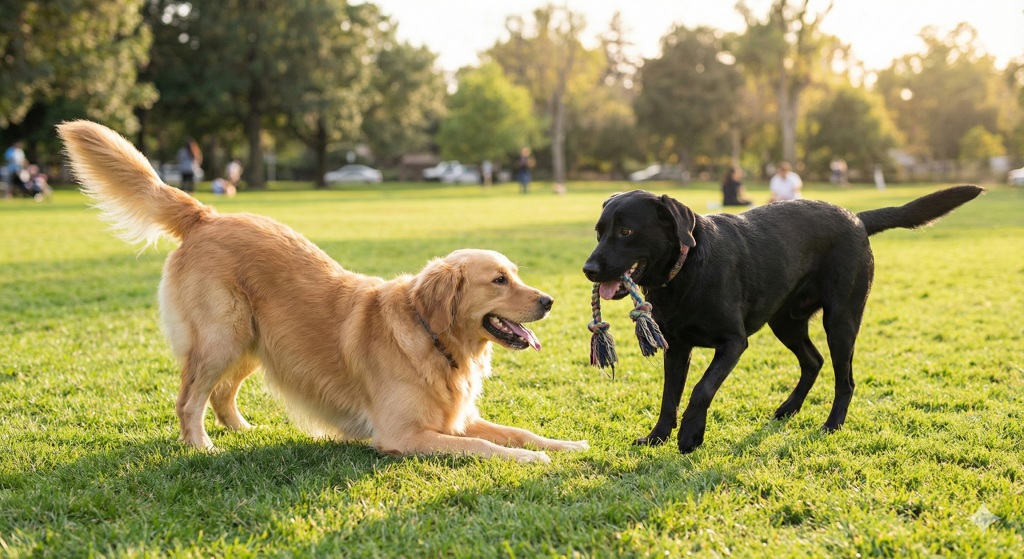
This is one of the most delightful signals in the canine world. The dog lowers their front end while keeping their rear end up in the air. This signals, “Everything I do after this is just a game.” It is a “meta-signal” that says, “I might growl or tackle you, but I’m just playing.”
Hackles Up (Piloerection)
When the hair along a dog’s spine stands up, it is called piloerection. Many people assume this means aggression. In reality, it simply means arousal. It’s like goosebumps in humans. It can happen because of anger, but also because of fear, surprise, or intense excitement.
Rolling Over
Does a dog rolling over always want a belly rub? Not always. If the dog is tense, totally still, and has their tail tucked, this is extreme submission. They are saying, “I am not a threat, please don’t hurt me.” A dog that wants a belly rub will be loose, wiggly, and likely have their mouth open in a relaxed “smile.”
Context is King: Reading the Whole Dog
To truly be an expert at dog body language, you must consider context.
- A dog licking its lips after eating dinner? Normal.
- A dog licking its lips while a child hugs them? Stress signal.
- A dog yawning at 10:00 PM in their bed? Tired.
- A dog yawning at the vet’s office? Anxiety.
Always look at the cluster of signals. Is the weight shifted forward (offensive/alert) or backward (defensive/fearful)? Is the body stiff or loose? By observing these combinations, you will unlock a deeper understanding of your dog’s inner world.
Conclusion
Understanding dog body language is about respect. It’s about listening to your dog when they whisper so they don’t have to shout (or bite). By paying attention to the position of the tail, the shape of the eyes, and the tension in the mouth, you can advocate for your dog, keep them safe, and build a relationship built on mutual trust and clear communication.
Next time you look at your dog, don’t just look—observe. What are they saying to you right now?
Ready to learn more? If you enjoyed this guide, share it with a fellow dog lover to help spread awareness about canine communication!
Article Source : www.houndtherapy.com/blog/d...
